A Hixson Waterfront Closing Ends at the Deed. The Dock Takes Longer.
October 1, 2026
October 1, 2026
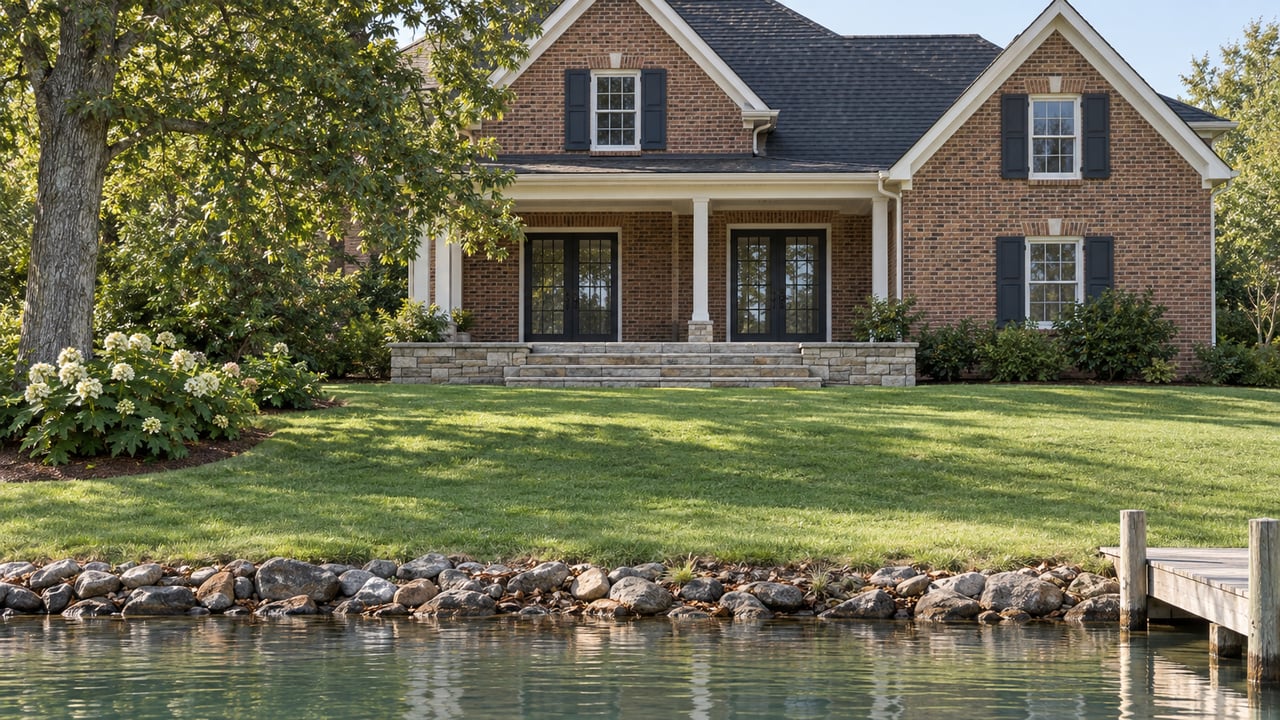
The wire clears on a Friday afternoon. The buyer picks up the keys to a place on Kings Road, walks down the sloped lawn toward the water, and pictures a boat tied up there by Saturday morning. On most of Chickamauga Lake in Hixson, that boat is going nowhere yet. The dock is still standing, the seller may have used it every weekend for a decade, but the federal paperwork attached to it still carries a stranger's name. Nobody at the closing table was required to bring that up.
A dock on Chickamauga Lake looks like a fixture, the same category as a fence or a detached garage. Legally it isn't. Every dock, boathouse, pier, or shoreline alteration on the Tennessee River and its tributaries falls under Section 26a of the TVA Act, which puts the Tennessee Valley Authority, not the county, in charge of who is allowed to use it. TVA describes the arrangement plainly on its own shoreline construction permits page: the fee to build a new dock runs $500, and the fee to reissue an existing permit into a new owner's name runs $250, with the whole process typically wrapped up in about two months. A permit, in other words, is not sold with the house. It has to be requested again, by the new owner, after closing.
That single sentence, buried on a government utility's website, is the entire reason a Hixson waterfront purchase behaves differently than a purchase almost anywhere else in the region.
The distinction matters because of what happens on the other side of closing. TVA requires the new owner to apply for that permit transfer, and the practical window most buyers are working with runs about 60 days from the date they take title. Miss that window and the dock exists in a kind of holding pattern: still built, still usable in the sense that nobody has torn it down, but not yet legally the buyer's to maintain, modify, or insure with full confidence.
Public access points on the same lake work under an entirely different set of rules, which is part of what makes the private side easy to misread. Chester Frost Park and Harrison Bay State Park both sit on Chickamauga Lake and neither requires this kind of individual federal permitting, because neither is a privately owned structure tied to one name. The moment a piece of shoreline becomes private and improved, in a subdivision along Kings Road or any of the coves nearby, it stops being a park amenity and becomes a federally regulated structure that has to be re-licensed every time it changes hands.
Here is where a buyer's budget and TVA's own website stop agreeing with each other.
| TVA's published rate | What's landing on 2026 permit applications | |
|---|---|---|
| New dock construction | $500 | Flat $1,000 fee reported since early 2025 |
| Reissue to new owner | $250 | Same flat $1,000 fee reported |
| Processing time (minor facilities) | About two months | 100 to 150 days is the realistic window |
The $500 and $250 figures still sit on TVA's public shoreline construction page as of this writing. But permit specialists and closing professionals working Chickamauga Lake transactions in 2026 have been quoting a flat $1,000 fee instead, a change they trace to early 2025. That is not a rounding difference. It's the kind of gap that shows up when a federal agency's posted rate card lags behind what its regional office is actually invoicing. The practical move for anyone closing on a Hixson waterfront property is to call TVA's Public Land Information Center directly at 1-800-882-5263 and confirm the current number before writing it into a budget, rather than trusting either the old figure or the newer one at face value.
The timeline gap is the more consequential one. TVA's own guidance for minor facility reviews puts a complete application at roughly two months, but permit specialists who file these applications regularly describe a realistic window of 100 to 150 days, longer if a boat ramp or any dredging is involved. Run that against the 60-day requirement to apply, and the math on a spring closing gets uncomfortable fast. A buyer who closes on a Kings Road property in April and files with TVA inside the required 60 days might not have an approved permit in their own name until August, right through the exact stretch of the calendar the dock would otherwise see the most use.
TVA's footprint rules cap most new dock construction at 1,000 square feet. That number moves for a specific category of property that TVA calls preexisting development: a subdivision recorded before November 1, 1999 where TVA had already permitted at least one water-use facility, or any lot within a quarter mile of a dock permitted before that date. Inside that boundary, a facility can run up to 1,800 square feet, nearly double what a brand-new dock built today is allowed.
A meaningful share of Hixson's lake-facing housing along corridors like Kings Road predates 1999, which means the assumption that older equals smaller has it backward on this lake. A buyer comparing two waterfront listings, one from a subdivision platted in the 1980s and one on a newly developed lot, isn't just comparing home finishes and lot size. They're comparing two different sets of federal construction rights attached to the water itself, and the older property may legally support the larger structure.
A few questions asked before a contract is signed, rather than after the movers have left, save weeks of frustration later.
The same rules that slow a buyer down can slow down a listing if a seller hasn't thought about it in advance. A dock without a current, matching permit on file is a question every serious waterfront buyer's inspector or attorney will eventually ask. Having that documentation organized before the property goes on the market, along with a clear answer on whether the lot sits inside a preexisting development boundary, turns a potential delay at closing into a selling point instead. It also gives a listing team something concrete to say when a buyer's first question on a showing is whether that boat lift actually comes with the house.
Does a grandfathered dock mean the permit doesn't need to change hands? No. Grandfathered status can affect how large a structure is allowed to be. It does not exempt a new owner from applying to put the permit in their own name after closing.
What happens if TVA finds an unpermitted addition after closing? The current owner is responsible for bringing the structure into compliance or removing it, regardless of who built the addition or when.
Is there a way to speed up the review? A complete, well-documented application with drawings that match the built structure moves faster than an incomplete one. There is no official fast-track, which is part of why building the timeline into a moving plan matters more than trying to shortcut it.
Buying or selling on Chickamauga Lake in Hixson comes with a genuine lifestyle payoff, but the paperwork behind that dock deserves the same early attention as a survey or a septic inspection. Putnam Property Group works with waterfront buyers and sellers across Hixson to get the permit history, the TVA zoning status, and the real closing timeline in front of you before an offer goes in, not after. Reach out for a straight read on a specific Kings Road or lakefront listing, or start with a free home valuation if you're weighing whether to list this season.
Stay up to date on the latest real estate trends.


Putnam Property Group is dedicated to helping you find your dream home and assisting with any selling needs you may have. Contact them today so they can guide you through the buying and selling process.

PUTNAM PROPERTY GROUP
ADDRESS 1428 CHESTNUT ST STE 114 CHATTANOOGA TN 37402